Industry
Premium café chain
Company
Coffee Bean & Tea Leaf (Jollibee Group)
Time Frame
Oct-Nov 2025
CMS: Marketing Website Design

Objective
The Coffee Bean & Tea Leaf sought to completely rebuild its digital marketing presence to emphasize the brand for a premium, connoisseur audience. The primary business goal was to shift the narrative away from discount-driven promotions and instead elevate the brand's core values of taste, premium craft, and curated customer moments. The website needed to act as an intelligent traffic router, seamlessly, guiding diverse customer segments to their most relevant purchase and engagement channels, including physical cafés, our digital loyalty framework, delivery aggregators, and retail touchpoints.
Solution
To satisfy the global brand directive of operating within a centralized CMS framework, I led a strategic design overhaul of our template architecture. Recognizing that a generic setup would fail to meet their sophisticated storytelling needs, I spearheaded the creation of a specialized component library engineered for deep flexibility. Market Expansion Logic: Scalable UX architectures tailored to support dual target-user behaviors across expanding regional markets. Global Modular Agility: A highly versatile component ecosystem that empowers local marketing teams to launch distinct landing pages easily without breaking core visual hierarchy or global layout guidelines.
My Role
As the lead UX/UI design manager on this initiative, I acted as the strategic support between global brand stakeholders, regional marketing teams, a front-end engineering team, and a product owner. Moreover, I cross-examined brand ideas against technical feasibility and CMS product constraints to safeguard long-term system health. I defined the overarching design strategy for our digital platform ecosystem—architecting a modular, component-driven framework that bridges creative expression with concrete business objectives.


Proposed Design Direction: Competitor Benchmarking & Visual Strategy
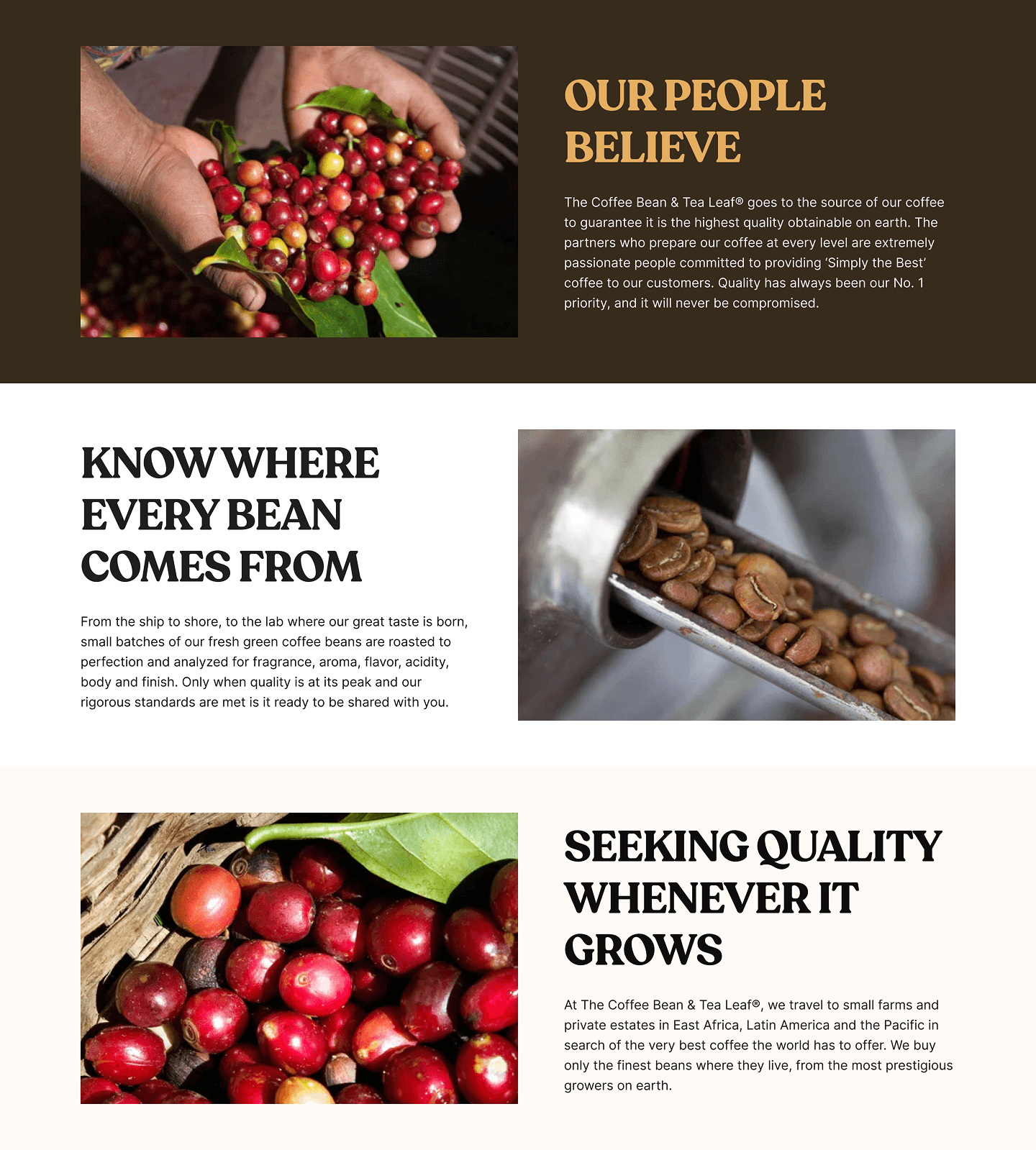
After I gained a clear understanding of our primary business goals, I leveraged AI-driven research frameworks to accelerate a comprehensive competitive analysis of global, premium-tier coffee and beverage brands. My analysis concluded that brands successfully commanding a premium price point invariably rely on high-fidelity, media-first visual narratives to communicate their values.


Define Design Direction & Solution
When initiating the CMS product design phase, I established a core architectural philosophy: the platform had to be flexible enough to support diverse, shifting business objectives, specifically balancing high-conversion transactional flows (direct e-commerce sales) with value-led brand storytelling. To achieve this operational agility, I partnered with our Product Owner to define a dual-track design strategy: - Strategic Core Pages: Bespoke, high-impact landing layouts explicitly optimized to drive marketing campaigns, market expansion, and user engagement channels. - Modular Reusable Components: A highly versatile library of flexible blocks and content variants, empowering local marketing teams to independently scale and launch future pages within the global CMS template without breaking code integrity or visual hierarchy.
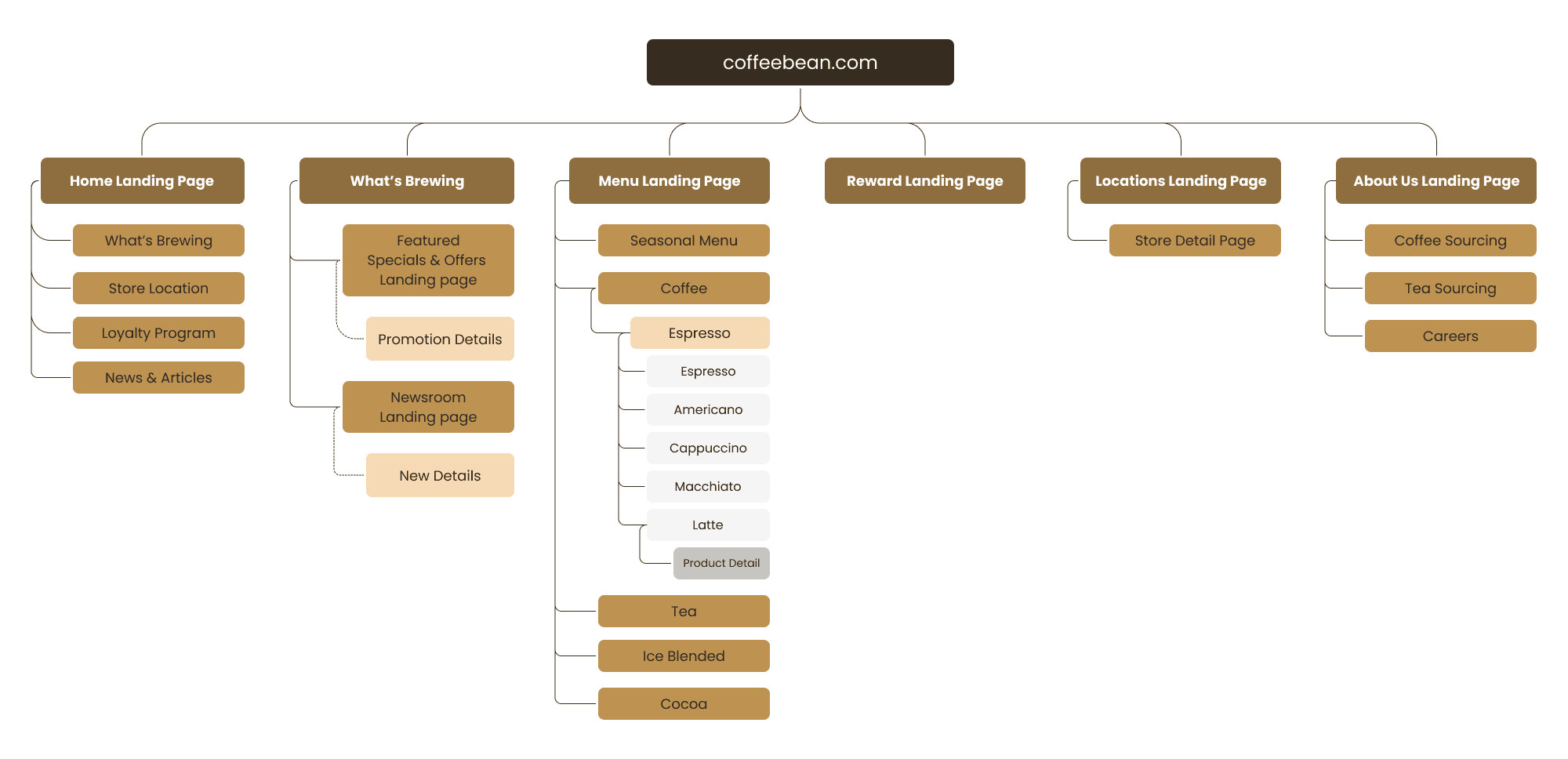
Strategic Core Pages
For strategic core pages, the goal was to streamline the publishing workflow: administrators simply input raw data into defined fields, and the CMS automatically handles the visual layout. Recognizing that our standard fields couldn't adequately support a complex beverage menu, I partnered with the Product Owner to overhaul this area of the CMS backend. We upgraded the input framework to include a robust Group Categories feature for better menu organization and integrated a dedicated Nutri-Grade field. For high-traffic landing areas, such as the homepage, key marketing campaigns, and promotional landing screens. I engineered a library of highly flexible components. These modules were designed to adapt dynamically to diverse content requirements, giving marketing teams total layout agility while strictly maintaining global brand consistency.


Modular Reusable Components
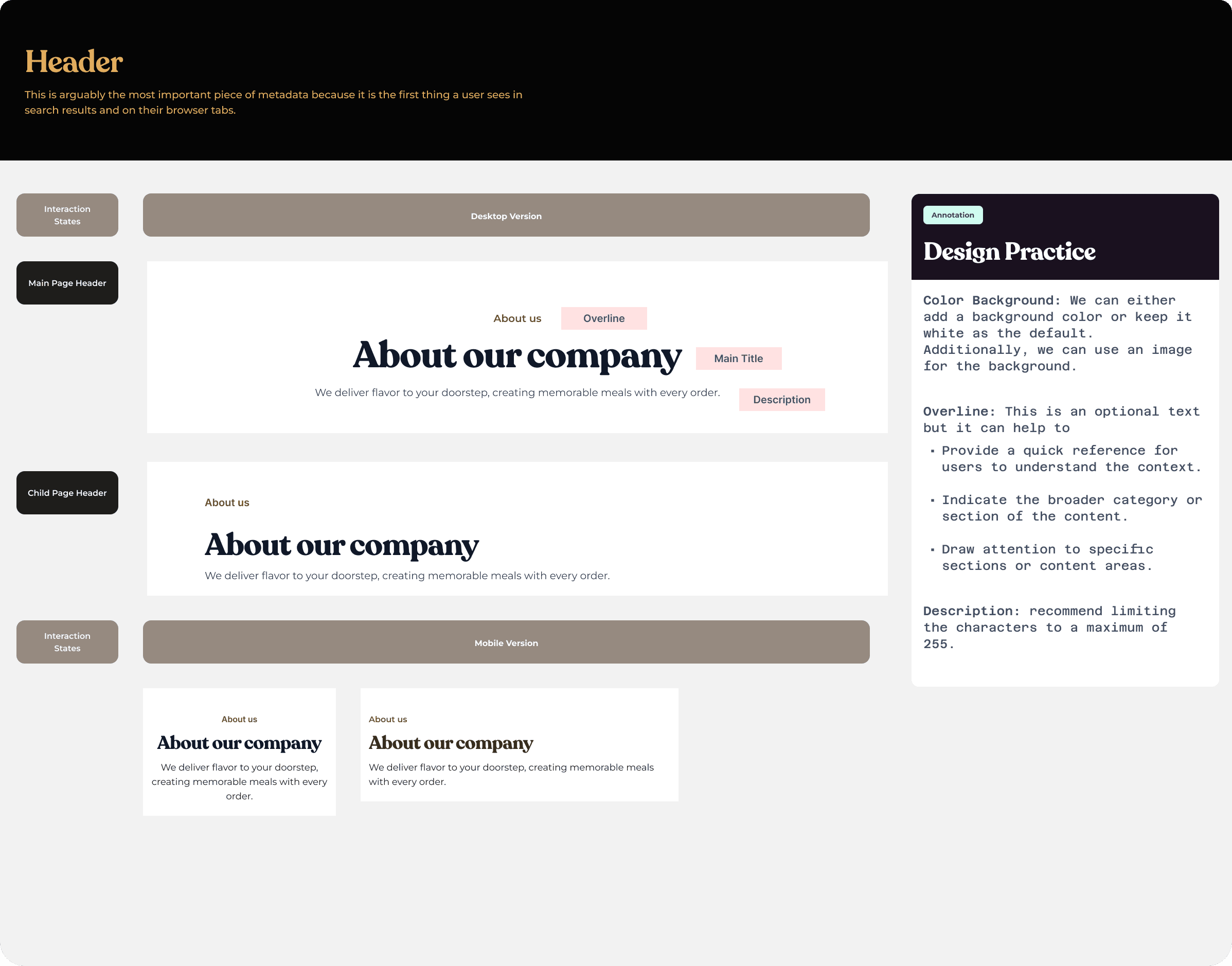
To support The Coffee Bean & Tea Leaf’s international market expansion, I architected the reusable component library with global scalability at its core. I designed the layout frameworks to natively support both Left-to-Right (LTR) and Right-to-Left (RTL) reading patterns, ensuring seamless bi-directional localization for new regional launches. Furthermore, I designed these CMS components to be partially customizable. This provides administrators with the structural flexibility to adjust layouts based on contextual content needs, while maintaining strict, automated guardrails to safeguard core brand consistency. By intentionally engineering every new component element around this fluid logic, I ensured that our layouts gracefully adapt to varying copy lengths and media assets without compromising our premium brand storytelling. Specifically, this partial customization empowers administrators to dynamically change typographic styles, select optimized image aspect ratios, and adjust background themes to fit the exact context of their local content.




Learning Recap
Drsign Impact
Rearchitecting the CBTL digital presence into a highly scalable, bi-directional CMS ecosystem served as the primary catalyst for our international digital growth. By establishing a robust, native LTR/RTL component library and a predictable content schema, I eliminated the traditional engineering bottlenecks associated with regional site rollouts. This strategic design-led framework empowers local marketing teams to autonomously launch highly localized campaigns and menus on schedule, completely eliminating design debt and ensuring absolute, premium brand consistency across every expanding market.
What I learned
Collaborating with the global brand team at Coffee Bean & Tea Leaf on this CMS platform provided a powerful lesson in dual-ecosystem design. I learned that scaling an enterprise CMS requires looking beyond the frontend interface to architect variant components for backend operations. Furthermore, this project shifted my perspective from designing an isolated marketing site to building a robust global product capable of supporting diverse, market-specific business models, whether optimizing purely for B2C consumer engagement or navigating complex B2B2C channel routing (cafés, franchises, and aggregators). Designing for international market expansion taught me how to balance immediate client requirements with long-term product sustainability, ensuring every localized enhancement contributed to a scalable.
The Challenge
One of the most critical challenges of this initiative was translating complex technical limitations into clear, business-oriented outcomes for non-technical brand stakeholders. While the global brand team initially requested advanced custom animations and high-fidelity motion behaviors to maximize visual polish, the core architecture of our CMS platform imposed strict technical constraints that made those features unviable for the initial rollout. By proposing alternative, we successfully secured cross-functional buy-in and aligned all teams on a realistic, high-quality MVP roadmap.